
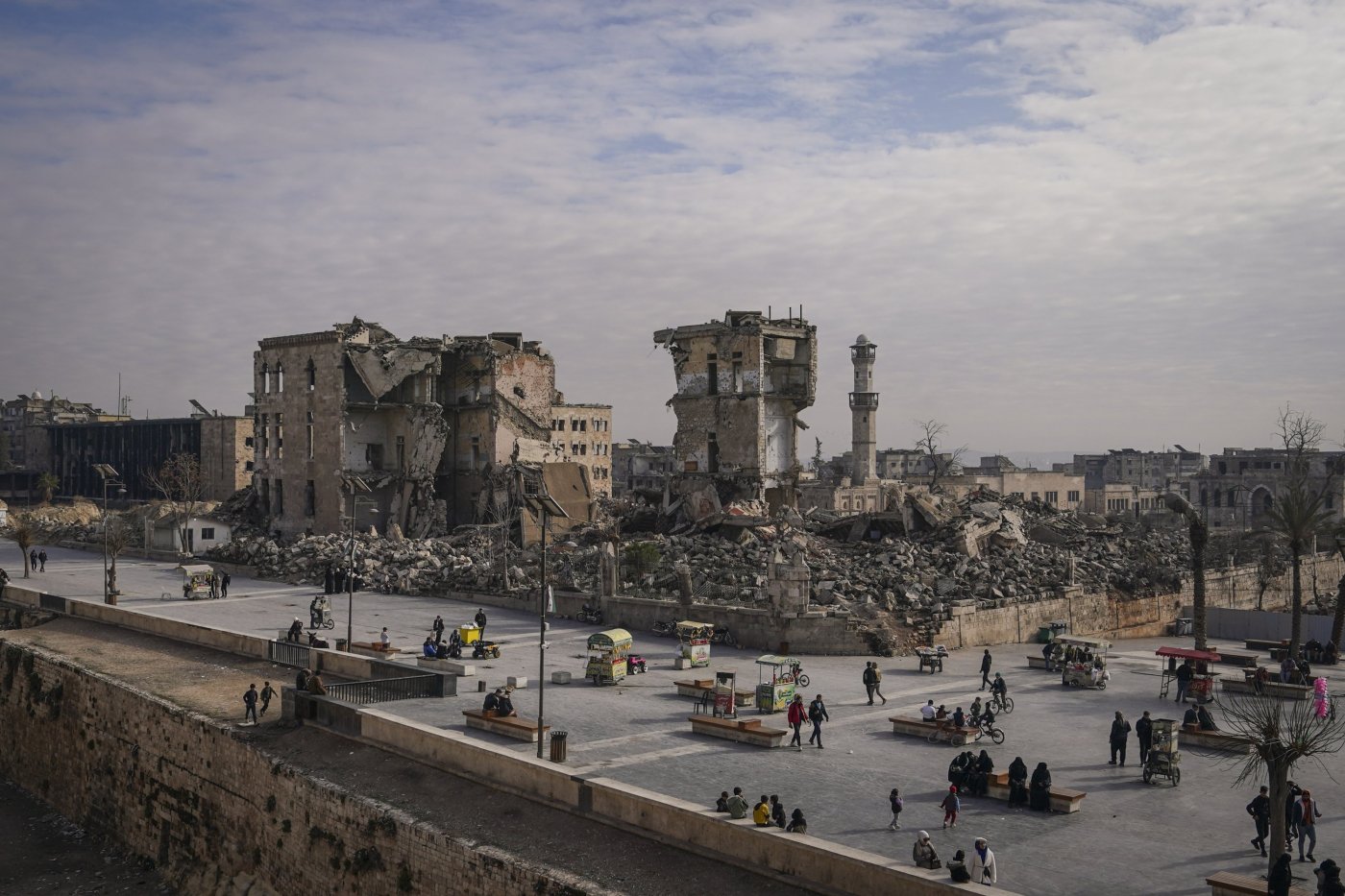
One year after the new authority emerged in Damascus, Syria appears different on the surface. In reality, very little has changed.
While the language and faces of power have shifted, the system of rule remains authoritarian. Decision-making is still monopolized, accountability is absent, and national sovereignty is weak.
A Change in Appearance, Not in Power
At first glance, Syria seems to have entered a new political phase. However, a closer look shows that change has been mostly cosmetic. The core structure of power is still based on exclusion, loyalty, and control. It prioritizes these elements over participation, transparency, or the rule of law.
Hiding the Past of the New Rulers
An emerging trend stands out. There is an attempt to hide or soften the extremist backgrounds of the new rulers in Damascus. Figures were once associated with radical ideologies. These figures are now presented as “moderate national leaders.” There is no public accountability or review of their past actions.
This strategy serves two goals:
- Reassuring international actors
- Preventing internal debate about the legitimacy of the current authority
Positions Given Based on Loyalty, Not Competence
Government jobs and senior positions are being distributed based on loyalty rather than qualifications. Many appointees lack experience or expertise but are close to the new centers of power.
As a result:
- State institutions have weakened
- Public services have declined
- Large segments of society feel excluded and marginalized
Propaganda and Online Intimidation
The authorities rely heavily on propaganda through traditional media and social media platforms. Pro-government online groups work to polish the image of the leadership, justify failures, and attack critics.
This creates a false sense of popular support while shrinking the space for free expression and open debate.
Using Religion to Legitimize Authority
Religion has increasingly been used as a political tool. In some mosques, sermons present government decisions as religious obligations, while opposition voices are portrayed as immoral or dangerous.
This blending of religion and politics undermines religious neutrality and blocks rational political discussion.
Sectarianism as a Tool of Control
Despite official talk of national unity, sectarian identities continue to play a role in governance. Instead of healing divisions caused by years of conflict, sectarian fears are exploited to manage power and maintain control.
This approach makes it impossible to build a state based on equal citizenship.
Real Power Lies Outside the State
Although civilian institutions exist, real power is held elsewhere. A parallel authority led by Hayat Tahrir al-Sham controls key security and political decisions.
Official state institutions function largely as a façade, used for internal and external legitimacy rather than real governance.
International Silence and U.S. Interests
Internationally, especially from the United States, there has been little meaningful pressure on the new rulers. This silence is not due to lack of information, but to political interests.
In exchange for security cooperation and regional concessions, democratic principles and accountability have been set aside.
Conclusion: A Fragile and Dangerous Stability
One year on, Syria faces a troubling reality:
- A state without real sovereignty
- A government without accountability
Stability built on propaganda, sectarianism, hidden power, and conditional international support is fragile. Without genuine reform, this path risks reproducing the crisis in deeper and more dangerous ways.
 IQ NEWS
Leave a comment